
Teaching your dog to sit is the foundation of every good training relationship. It’s often the first command new owners teach — and for good reason. “Sit” is practical, safe, and forms the bedrock of dozens of more advanced behaviors. In this guide, we’ll walk through the most effective methods to teach it, troubleshoot common problems, and explain how mastering this one command opens the door to a lifetime of rewarding communication.
Why “Sit” Is the Most Important Command
Beyond its obvious utility (asking your dog to sit before meals, before crossing roads, when greeting visitors), “sit” serves a deeper purpose. It establishes a communication channel between you and your dog. When your dog understands that doing something earns a reward, the learning process accelerates dramatically. “Sit” is the entry point to that system.
What You’ll Need
- Small, high-value treats (chicken pieces, cheese, commercial training treats)
- A quiet, distraction-free environment to start
- 5-10 minute sessions (dogs learn better in short bursts)
- Patience and consistency
Method 1: The Lure Method (Best for Beginners)
This is the fastest method for most dogs and the one recommended by most professional trainers, including those behind the .
- Hold a treat close to your dog’s nose.
- Slowly move your hand upward, from nose to above their head. As their nose follows the treat upward, their bottom naturally goes down.
- The moment their bottom touches the floor, say “Yes!” or click (if using a clicker) and give the treat immediately.
- Repeat 5-10 times per session.
- After 2-3 sessions, add the verbal cue “Sit” just before you start the lure motion.
- Once your dog consistently responds to the word + lure, begin fading the lure by using just the hand gesture, then just the word.
Method 2: Capturing (Best for Patient Trainers)
This method requires no food luring — instead, you simply wait for your dog to naturally sit, and the moment they do, you mark and reward it. Over time, your dog figures out that sitting earns rewards, and begins offering the behavior more frequently.
- Keep a small treat pouch on you throughout the day.
- Whenever your dog spontaneously sits, immediately say “Yes!” and give a treat.
- After a few days, add the word “Sit” just as they begin lowering themselves.
- Soon, your dog will understand that the word predicts the reward-earning behavior.
This method often produces dogs who sit with exceptional reliability because they discovered the behavior on their own — but it takes longer than luring.
Common Problems and Solutions
My dog jumps up instead of sitting
You’re probably moving the treat too high over their head. Keep it closer to their nose and move it back toward their tail rather than upward. Think of a straight line from nose to tail, not nose to ceiling.
My dog backs up instead of sitting
Practice with your dog in a corner or against a wall. The gentle barrier prevents backing up and encourages the sit response.
My dog won’t sit outside or around distractions
This is a very common issue called poor generalization. Your dog learned “sit” in one specific context (your kitchen) and hasn’t yet understood it applies everywhere. You need to practice in different locations, gradually increasing difficulty. See our guide on dog training tips for how to generalize commands effectively.
My dog is food-obsessed and won’t focus
Try practicing just before meal times. Also, consider the approach of using mental stimulation to calm a hyper-focused dog before training sessions.
Building on “Sit”
Once your dog reliably sits on cue, you can use it as a foundation for:
- Sit-Stay: Ask for a sit, then gradually extend the time before rewarding
- Sit to greet: Teaching your dog to sit instead of jumping on visitors
- Sit before meals: Instilling patience and impulse control
- Sit before crossing roads: A potentially life-saving safety behavior
Looking to move beyond the basics? A structured program like provides a full progression system that builds on fundamental commands like sit to teach remarkable advanced behaviors — from ringing a bell to alert you, to picking up dropped items on command.
What to Try First
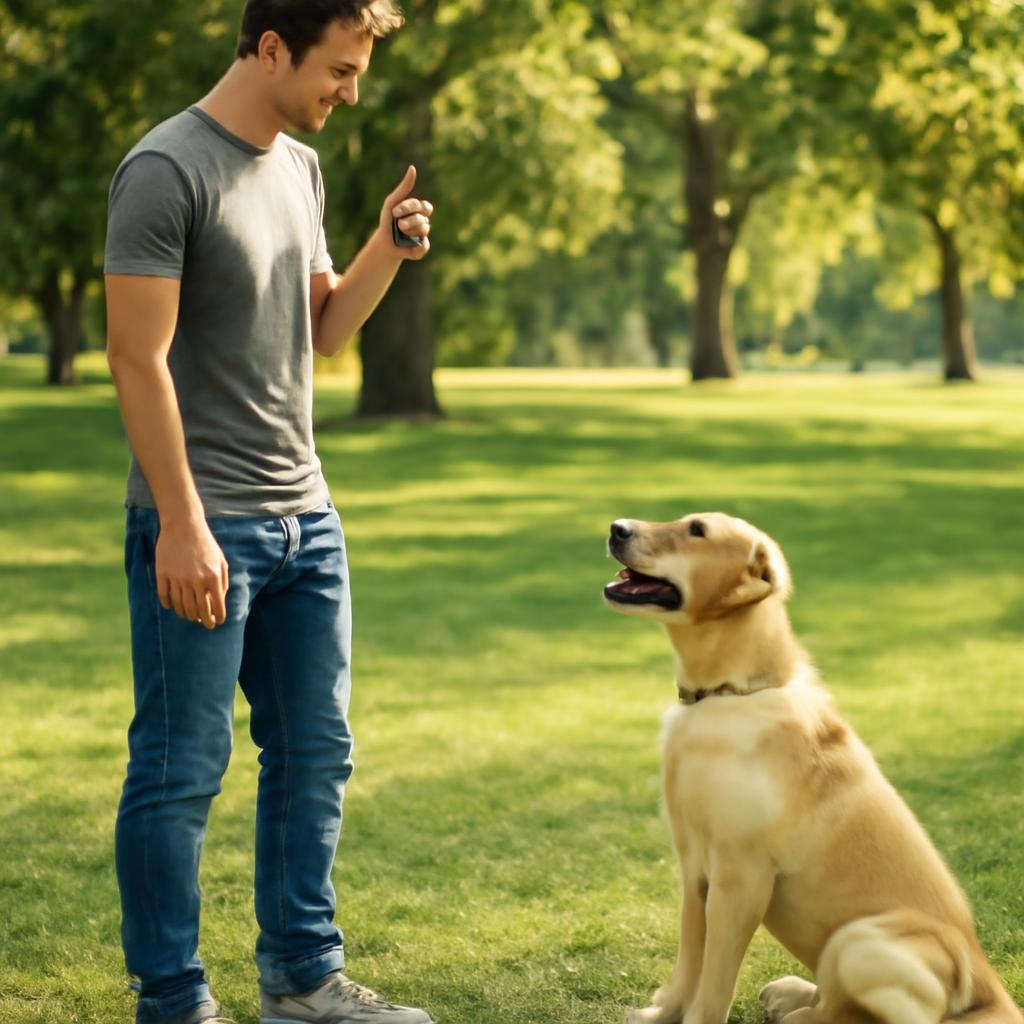
Start with the lure method — it’s the fastest way for most dogs to understand what “sit” means. Hold a small treat between your fingers, place it just above your dog’s nose, and slowly move it back over their head. As their nose follows the treat up, their bottom naturally drops to the floor. The moment they sit, say “yes!” or click and give the treat. Most dogs get this in 2–5 tries.
Once your dog is sitting reliably when you lure them, start adding the word “sit” just before you lure. After 5–10 repetitions, try saying “sit” without the lure and see if they offer the behavior. Fade the lure as quickly as possible — you want a hand signal or verbal cue, not a dog that only sits when they see food in your hand.
Common Mistakes to Avoid
- Repeating the cue: Saying “sit, sit, SIT” teaches your dog that the first “sit” means nothing. Say it once, wait, help if needed.
- Pushing their hindquarters down: Physically forcing a dog into a sit can cause discomfort and erodes trust. Let them figure it out.
- Using “sit” when you mean “stay”: “Sit” means put your bottom down. If you want them to hold it, train a separate “stay” cue.
- Only practicing at home: A dog that sits perfectly in the kitchen but ignores you at the park hasn’t generalized the behavior. Train in many different locations and with varying levels of distraction.
- Boring treats: In high-distraction environments, use high-value rewards — cooked chicken, cheese, or hot dog. Your competition is squirrels.
Your 10-Minute Daily Sit Training Routine
- Days 1–3 (2 min): Lure sits in a quiet room. 10 repetitions per session. Treats every time.
- Days 4–6 (3 min): Add the verbal cue before the lure. Start fading the lure — use an empty hand and reward from the other hand.
- Days 7–10 (5 min): Practice in different rooms, then outside in the garden. Add duration by waiting 1–2 seconds before rewarding.
- Days 11–14 (5 min): Take it on walks. Ask for a sit before crossing roads, before greeting people, before getting the food bowl. “Sit” becomes a life skill, not just a trick.
When to Get Professional Help
Sit is one of the simplest behaviors to teach, so if your dog genuinely can’t learn it after consistent training, that’s worth investigating. Consider talking to a vet or trainer if:
- Your dog seems physically uncomfortable sitting (could indicate hip dysplasia, arthritis, or other orthopedic issues — especially in large breeds)
- Your dog is unable to focus or take treats even in calm environments (anxiety or medical issues)
- You’ve been consistent for 2+ weeks and see no progress whatsoever
A certified trainer can assess whether there’s a training gap or whether something else is going on.
Brain Training for Dogs
The most comprehensive brain training program for dogs we’ve reviewed. Designed to reduce boredom, bad behavior, and build a stronger bond — through science-backed mental stimulation games.
Check Brain Training for Dogs →Affiliate link — we may earn a commission at no extra cost to you. Full disclosure.
Disclosure: We may earn a commission if you purchase through links on this page. This does not affect our editorial assessment. See our affiliate disclosure.